
Plastering information
Selecting a level of finish
It is important to specify the level of finish required in each area of the home during the design phase to avoid disappointment in the final result. The flow diagram on the right has been developed to assist in selecting the most appropriate finish for each area.
For areas which may be subject to glancing light, a level 5 finish is strongly recommended to reduce critical lighting effects, but it cannot be expected to totally alleviate any glancing light issues.
Levels of Finish
The Australian Standard AS/NZS 2589:2017
Gypsum linings - Application and finishing’ defines three levels of finish for plasterboard walls and ceilings and provides minimum specifications for the installation process, from framing preparation to finishing, to achieve each of the finishes.
Skim coating is a term used to describe a thin finish coat, rolled, trowelled or airless sprayed and then possibly sanded, to achieve a smooth and even finish. It is normally less than 1mm in thickness and is applied over the entire plasterboard surface to conceal imperfections in the joint work, smooth the paper texture and provide a uniform surface for decorating.
Gyprock® One Finish assists in achieving the highest criteria of a uniform and smooth Level 5 finish on plasterboard walls and ceilings subject to critical lighting conditions.
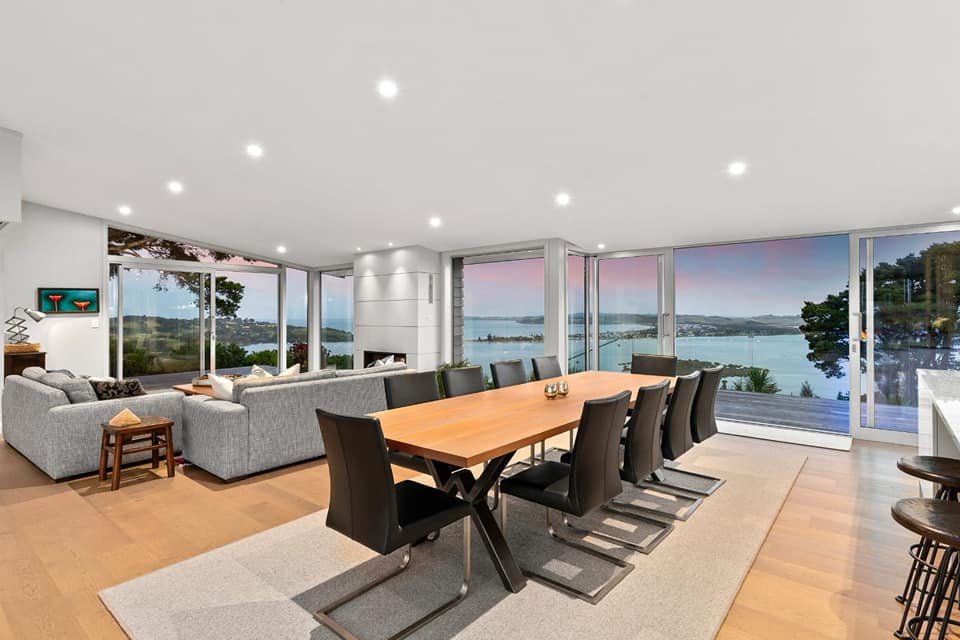
Level 3.
For use in areas that do not require a finish, such as above ceilings and inside service shafts and other inaccessible spaces. All joints are to be taped with two applications of compound and all fastener heads are to be covered. Compound is to be finished smooth, such as by scraping ridges etc. with a trowel.
Level 4.
Level 4 is the generally accepted level of finish for domestic construction. Joints are to follow a three-coat system, consisting of; a tape coat plus two subsequent coats applied over the tape coat and fastener heads. All joint compounds should be sanded to a smooth finish free of tool marks and ridges. A flat, matt or low sheen, light coloured paint finish is recommended.
Level 5.
This level of finish should be used wherever:
critical light conditions occur such as from windows, skylights, or silhouette and spot lighting
gloss or semi-gloss paints are to be used
where paint is mid or dark coloured
A Level 5 finish requires a high level of frame alignment to ensure a smoother surface. All joint compound should be sanded to a smooth finish free of tool marks and ridges. This should be followed by the application of a skim coat to remove differential surface textures and porosity.
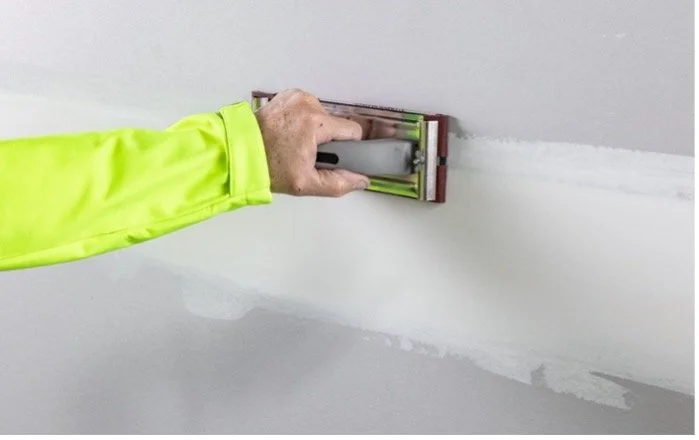
Level 5 Skim Coating
Skim coating is one method to achieve a Level 5 Finish as specified in AS/NZS 2589:2017. A Level 5 Finish is defined as being ‘characterised by a parity of texture and porosity’ over the entire surface of the plasterboard, jointing and fastener points.
Skim coating can be achieved by applying jointing compound to the surface with a trowel. This creates a uniform texture (and also hides bumps, steps and joint protrusions).
Alternatively, high build paint systems can be used. These are comprised of a specially formulated high build coating which is very efficiently applied with airless spray equipment. These also do an excellent job of masking surface texture variance, but may not correct irregularity in the board surface.